

Lot n° 164
Estimation :
1500 - 2000
EUR
Result with fees
Result
: 4 940EUR
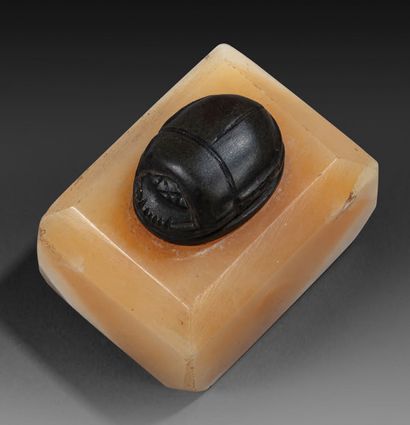
Scarab heart - Lot 164
Scarab heart
Egypt
Third Intermediate Period, circa 1069-664 B.C.
Green stone
Catalog correction
L. 3.5 cm
The scarab is anepigraphic, with finely sculpted anatomical details and sparsely detailed legs.
A heart scarab, usually in green stone such as jasper or serpentine, replaces or doubles the heart, considered the seat of conscious memory. During the Judgment of the Dead, it was weighed and the deceased's admission to the realm of the afterlife depended on its balance with the Maat norm.
Heart scarabs are generally not pierced. They are mounted in a pectoral or placed between a mummy's bandages. Some of the scarabs are inscribed with an extract from the Book of the Dead relating to weighing.
Provenance :
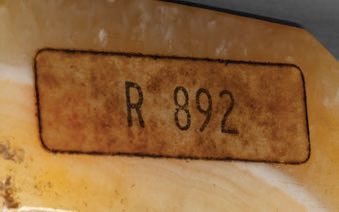
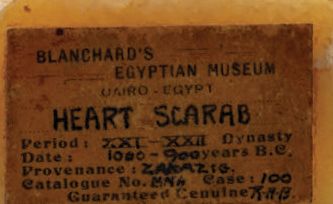
- Formerly in the collection of the Blanchard Museum in Cairo, directed by Ralph Huntington Blanchard (1875-1936). Blanchard's Egyptian Museum label affixed to the underside of the yellow marble base mentions the supposed place of discovery as "Zakazig", a site north of Bubastis.
- Letter from the British Museum dated January 8, 1973
Comparative literature :
- E. Feucht, Lexikon der Ägyptologie II, Herzskarabäus, pp. 1168-1170, Harrassovitz Wiesbaden 1975
- M. Malasie, Les Scarabées de Coeur dans l'Egypte ancienne, Brussels, 1978
- C. Andrews, Amulets of Ancient Egypt, British Museum Press 1999
My orders
Sale information
Sales conditions
Return to catalogue